
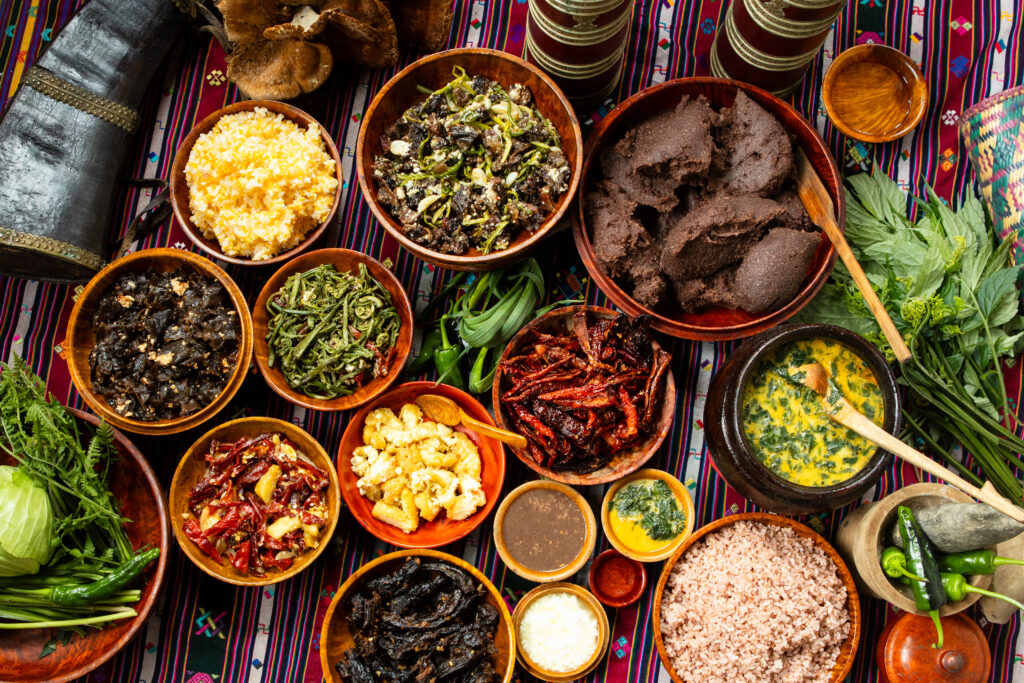
For many travellers, Bhutan’s landscapes leave a lasting impression. Yet one of the country’s most memorable discoveries happens around the dining table. Bhutanese cuisine is bold, comforting and deeply connected to local agriculture, high-altitude living and centuries of tradition. Whether you’re enjoying a farmhouse lunch in Punakha, sampling street snacks in Thimphu or sharing suja beside a wood-fired stove, every meal offers a deeper understanding of Bhutanese culture.
This guide explores Bhutanese food, traditional dishes and culinary experiences that every visitor should discover.
What Makes Bhutanese Cuisine Unique?
Bhutanese cuisine celebrates simple ingredients prepared with confidence and flavour. Fresh vegetables, red rice, cheese, chilies, buckwheat, maize and yak products reflect the country’s diverse landscapes. Meals are seasonal, locally sourced and closely connected to farming communities, giving Bhutan one of the most authentic food cultures in the Himalayas.
Ema Datshi: Bhutan’s National Dish
No Bhutan food guide is complete without ema datshi. Made from fresh green or red chilies simmered with local cheese, this iconic dish reflects Bhutan’s love of chilies, which are treated as a vegetable rather than merely a spice. Variations include kewa datshi (potatoes), shamu datshi (mushrooms) and kewa ema datshi.
Red Rice and Everyday Favourites
Nutty Bhutanese red rice accompanies most meals and pairs perfectly with curries, vegetables and datshi dishes. Other favourites include phaksha paa (pork with red chilies), jasha maru (spicy chicken), momo dumplings and hearty buckwheat dishes enjoyed in central and eastern Bhutan.
Suja, Ara and Traditional Beverages
Butter tea, known as suja, surprises many first-time visitors with its savoury flavour. It provides warmth and energy in the mountains and remains an important symbol of hospitality. In some regions, ara, a traditional grain-based beverage, is served during celebrations and family gatherings.
Farmhouse Dining: The Best Culinary Experience
One of the finest ways to experience Bhutanese food is by sharing a meal with a local family. Farmhouse dining introduces visitors to freshly harvested ingredients, home-style cooking and genuine hospitality. These meals often become highlights of a journey because they combine authentic cuisine with meaningful cultural exchange.
Regional Flavours Across Bhutan
Every valley adds its own character to Bhutanese cuisine. Haa is known for buckwheat, Bumthang for dairy products and cheese, while eastern Bhutan offers distinctive local recipes influenced by regional ingredients. Exploring these differences is part of discovering the country’s culinary diversity.
Food Etiquette and Dining Tips
Meals are often shared family-style. Accepting tea or food is considered a gesture of friendship, and trying local dishes is appreciated. Travellers who enjoy spicy food will feel at home, while those who prefer milder flavours can usually request less chili when dining in hotels and restaurants.
Amo Recommends
Look beyond restaurant menus. Visit a local market, enjoy a farmhouse lunch and ask your guide about seasonal specialties available during your visit. The most memorable meals in Bhutan are often the simplest ones, prepared with fresh ingredients and shared with warm conversation.
The Taste of Bhutan
Long after your journey ends, you may remember the aroma of freshly cooked red rice, the warmth of suja on a cool mountain morning or the bold flavour of ema datshi. Bhutanese cuisine is not designed to impress with complexity; it delights through authenticity, freshness and its deep connection to the land and its people.

